
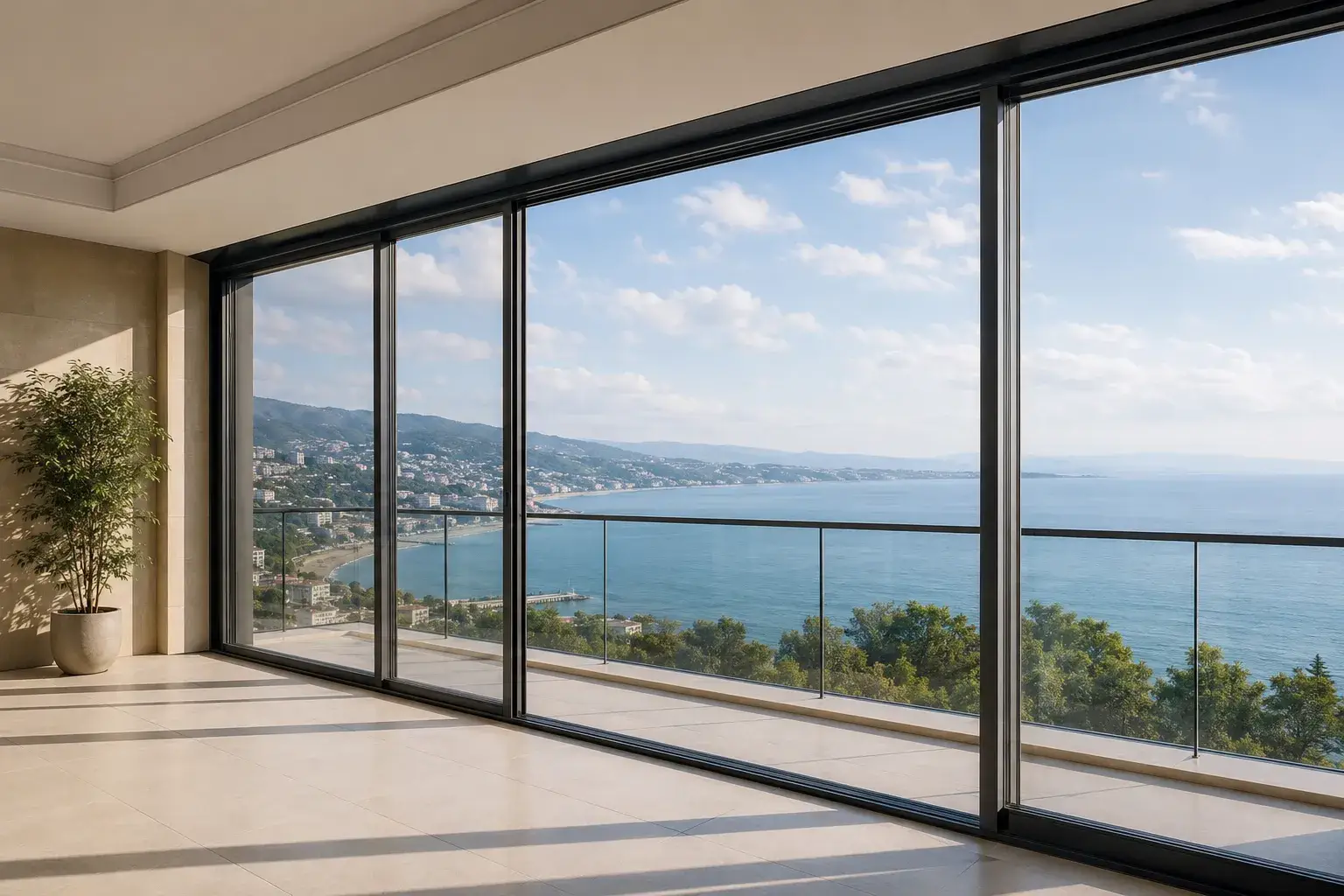
We glaze balconies and terraces, replace windows and install panoramic systems, including sliding and lift-and-slide doors. On the coast this is not a catalogue purchase: the same system behaves differently on the fifth floor facing the sea and in a sheltered courtyard.
Wind and salt
Glazing is calculated for wind load rather than taken as standard, because a storm here arrives horizontally and the pressure on a panoramic panel on an upper floor is several times what a catalogue assumes. Hardware is specified with anti-corrosion coating: ordinary galvanised fittings on the first line start to bind after two or three seasons of salt air, and replacing them later costs more than specifying them correctly at the start.
What usually leaks
Not the glass but the junctions: the sill, the connection to the wall, the threshold of a balcony door, and the drainage holes in the frame. Blocked drainage holes are the single most common reason for water on a windowsill during heavy rain — it looks like a failed seal and is a ten-minute fix if anyone knows to look. We check them during installation and explain how to clean them.
Warm and cold glazing
Cold glazing shelters a balcony from wind and rain but does not make it part of the flat. Warm glazing does, but it changes the structure, the heating and sometimes the permitted works in the building. We say in advance what is realistic for your balcony, what the slab will carry and what will need agreement.
Condensation
New windows are tighter than old ones, and in a flat with no working extraction the moisture that used to escape through the frames now condenses on the glass. That is not a window fault. We check the ventilation before the installation and add intake where it is needed, so the new windows do not create a damp problem.
Timing, price and warranty
Measuring, production two to three weeks, installation one or two days. We quote a range by phone and give a specification after measuring. Warranty: two years on installation and hardware.