
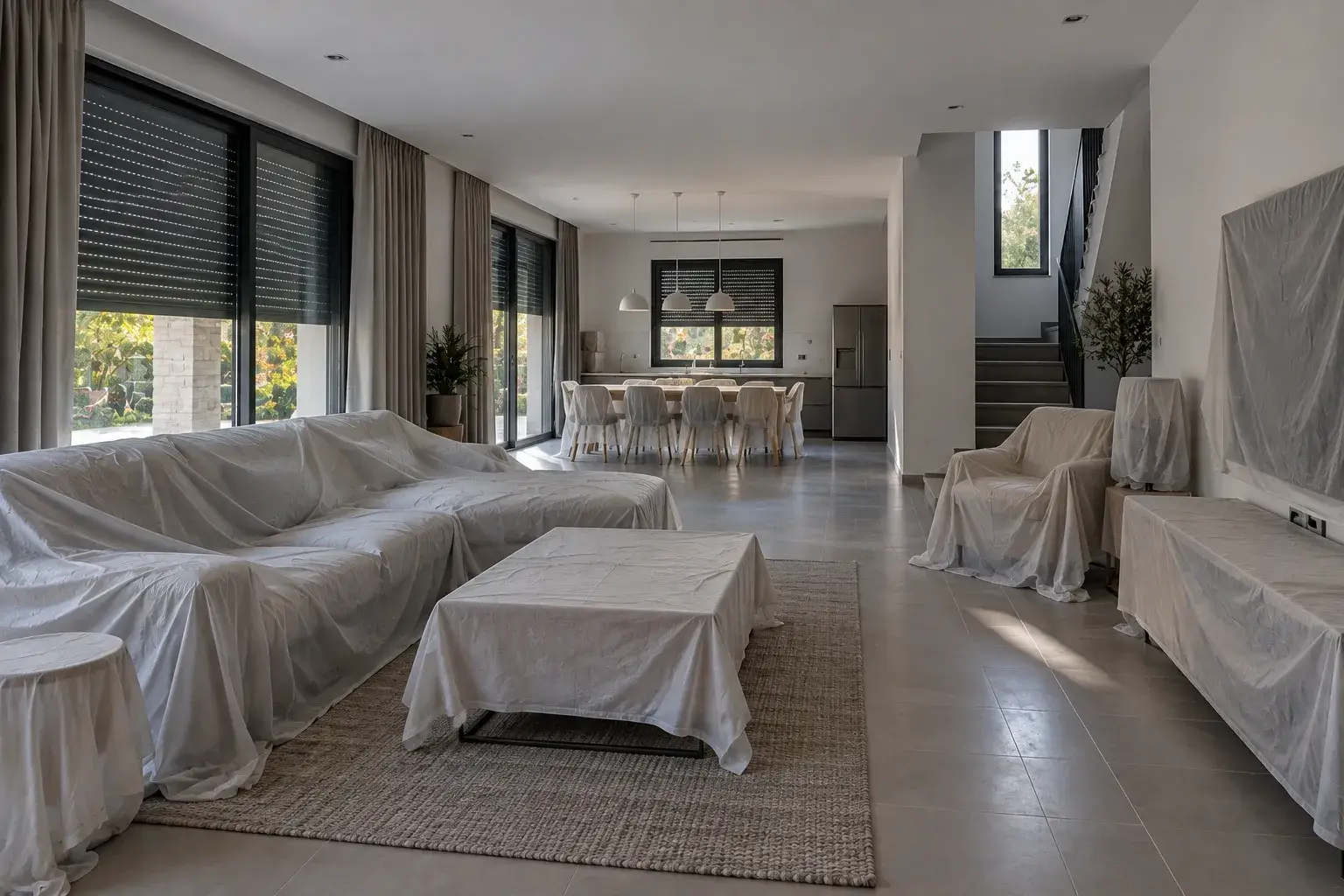
We close properties for the off season and reopen them before the owner or the first guests arrive.
What closing actually involves
Draining external lines and protecting pipework from frost; shutting off water at the main so a failure cannot flood anything; setting the heating to a minimum regime where the property is heated; protecting equipment and draining what needs it; storing textiles in closed storage rather than leaving them on the beds; emptying the fridge and leaving it open; and setting a ventilation schedule for the visits that follow.
Different priorities by location
In the mountains the frost protection matters most: an unprotected line ruptures during a long power cut and the damage is found in spring. On the coast it is ventilation, because a closed property in seventy percent humidity grows mould rather than freezing, and six months without airflow produce a smell that takes weeks to remove. The same service means different work in Gudauri and in Kobuleti, and we plan it accordingly.
Visits during the closure
Closing is not the end of the job. Through the off season we visit on a schedule to air the property, check for leaks and damp, confirm the heating is holding and look at the roof and drainage after storms. That is what makes the difference between finding a problem in November and finding it in April.
Reopening
A few days before you arrive: water and heating on, systems checked and run, the pool started if there is one, cleaning done, fresh linen, windows washed and groceries on request. You arrive to a working property rather than to a checklist.
Price
Closing and reopening are priced as separate jobs; the visits in between are part of the upkeep fee.