
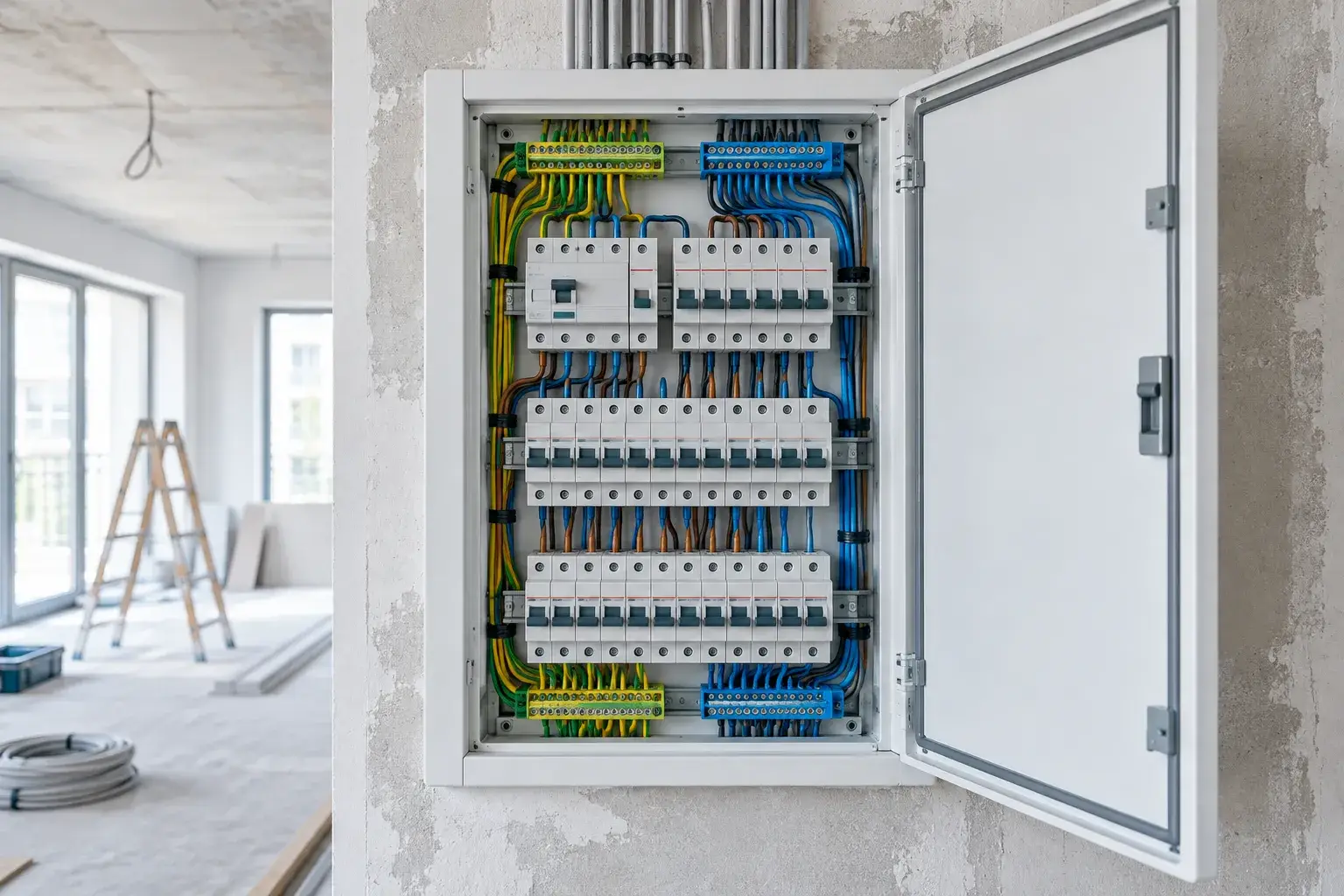
We design and install electrics: cable routes, the distribution board, sockets and switches, lighting circuits, connection of appliances, earthing and residual current devices.
Load first, cable second
We start from what will actually be plugged in: water heater, air conditioners in each room, hob, oven, washing machine, dishwasher. In older flats here the existing circuit is usually aluminium wiring on twists that was designed for a light bulb and a television — it will not carry any of this. Once the real load is known, the cable cross-sections, the board and the number of circuits follow from it rather than from habit.
What is standard for us
Earthing and residual current devices, separate circuits for high-power appliances, and a voltage relay on the input because in Georgia surges damage appliances more often than outages do. In coastal flats we specify sockets and fittings with anti-corrosion contacts, since salt reaches them long before it reaches anything structural.
What you get besides the wiring
Concealed work is photographed and filmed before it is closed up, and the layout drawing of the routes stays with you. Two years later, when a picture has to be hung or a socket added, nobody drills blind. Circuits in the board are labelled by room and by appliance rather than by number.
Lighting
Planned by scenario together with the design project: work light, evening light, switching from two points where it matters. Drivers and transformers go in accessible places with a hatch, because they fail long before the LED strip does.
Timing, price and warranty
Rewiring a one-bedroom apartment takes about a week, a house longer and depends on the routes. We quote a range by phone and give an itemised estimate after a site visit. Warranty: three years on concealed engineering.