The developer has messaged that the building is ready and you can collect the keys. This is the moment when the buyer has the most leverage: until the handover certificate is signed, the developer fixes any defect as its own. After the signature the same chip on a glass unit or an uneven screed becomes a subject of correspondence, and sometimes your own expense. Below is what to check in a new-build flat in Batumi before you sign, what to check it with and how to record your remarks properly.
In short
- Do not sign the certificate “with no claims” if you have found defects. First a list of remarks and deadlines for fixing them, on paper.
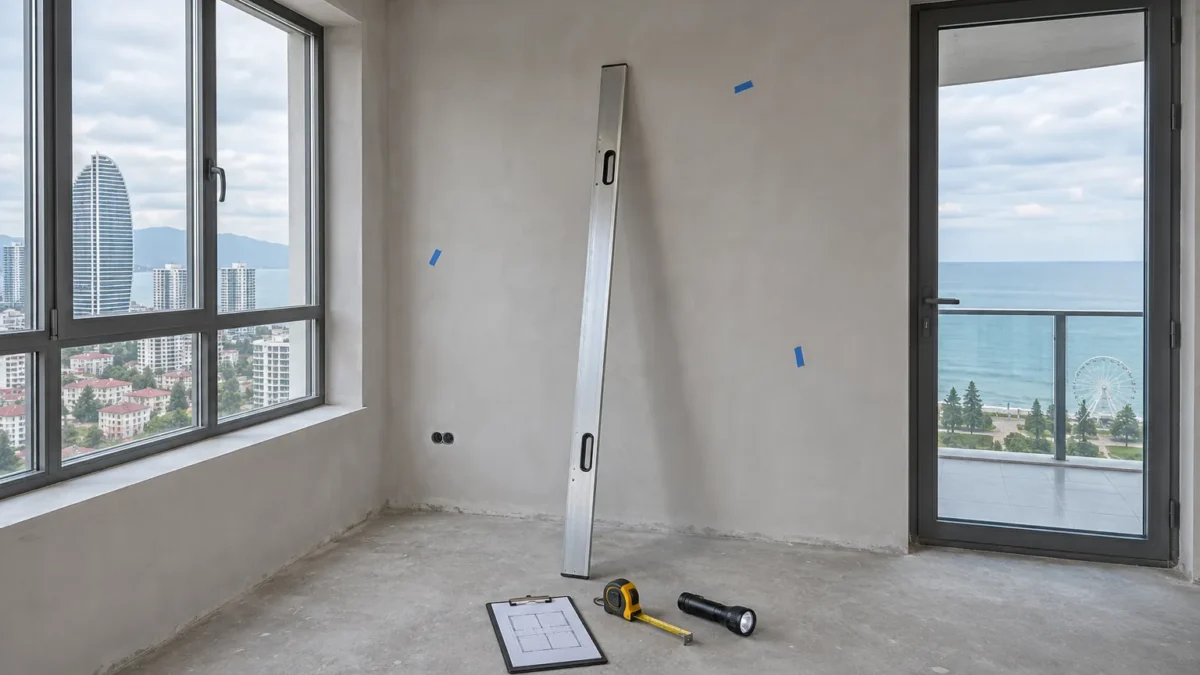
- Take a tape measure, a two-metre level, a torch, a phone charger and the floor plan from your contract.
- Serious defects most often hide in the windows, balconies, screed and ventilation. Scratches on a door catch the eye at once, but they are minor.
- The best time for the handover inspection is after heavy rain: leaks at balconies and windows show straight away.
- If you are abroad, the handover can be done under a power of attorney or entrusted to a site supervision engineer with a photo and video report.
Before you go to the property
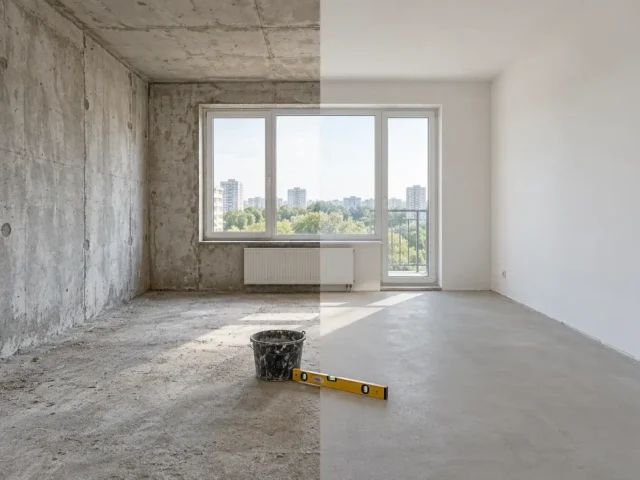
Reread the contract. It states the condition in which the flat is handed over: black frame, white frame or a finished renovation. That decides what counts as a defect. In a black frame a missing screed is normal, in a white frame it is not. If the terms are confusing, we have a separate article on black frame and white frame.
Ask the developer whether the building has been accepted into service and request a copy of the document. Ask what measurements and checks the company did itself and whether you have a warranty on the windows, doors and building services. Agree on a time for the inspection in daylight. In the evening with a torch you simply will not see half of the defects.
If you can choose the day, pick one that follows a good downpour. In Batumi rain often comes with wind, water hits the facade from the side, and every weak spot at window and balcony slab joints shows the next day: wet reveals, streaks under the window board, a puddle at the threshold of the balcony door.
What to take with you
- A 5-metre tape measure or a laser distance meter.
- A builder’s level or a straightedge 2 metres long. A short 60-centimetre level will not show a curved wall.
- A bright torch. Light along the wall from the side reveals waves and bumps better than any instrument.
- A phone charger or a night light, if the flat already has sockets: it makes checking each one easier.
- A strip of thin paper or a tissue to test the extract ventilation.
- The floor plan from the contract, a pen and masking tape to mark defects right on the walls.
- A charged phone: photograph every defect in a wide shot and close up, next to the tape measure for scale.
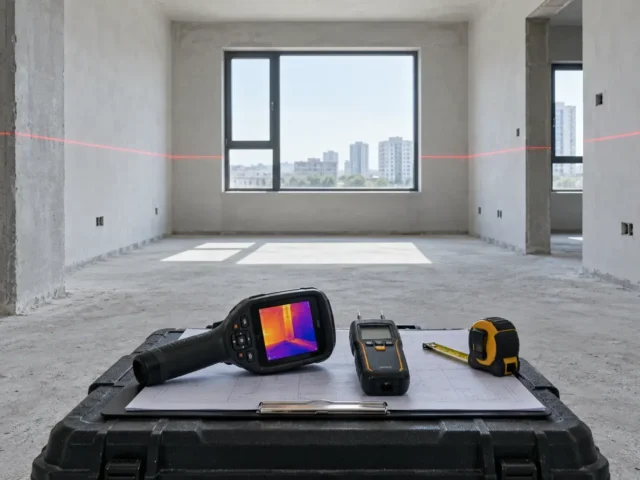
A moisture meter, a thermal camera and a laser line level are useful but not essential for an ordinary buyer. A site supervision engineer brings them if you invite one to the handover.
Documents, area, meters
Check the flat number, floor and position against the contract. It looks like a formality until it turns out the windows face the courtyard instead of the sea. Measure the main rooms. A small difference from the plan is normal, but if the area is noticeably smaller, see what the contract says about recalculation.
Find the electricity, water and gas meters, if gas is connected. Write down their numbers and photograph the readings. This protects you from bills for the construction period. Find out which company holds the account and how to transfer it to your name.
Windows and balcony doors
We check windows first because they are the hardest to fix after signing. Open and close every sash in all modes: turn, tilt, micro-ventilation. The sash should move easily, without sticking, and close evenly. You can test the seal with a sheet of paper: shut it in the sash at several points. If the sheet pulls out easily, there will be a draught there.
- Glass units: scratches, chips, traces of cement and welding. Look at them at an angle to the light.
- Seals: intact, no breaks at the corners, fitted all the way round.
- Reveals and the fitting joint: the foam must be covered, with no gaps or cracks along the joint.
- The outer sill: whether there is one at all and whether it takes water away from the wall.
- Drainage holes at the bottom of the profile: not blocked with building debris.
- Panoramic glazing: secure fixing, no cracks at the edge of the glass, a guard rail where safety requires one.
When the hardware, the sill or the fitting joint is clearly done badly, demand that it is redone straight away. If the windows later need replacing or the reveals need insulating, that is part of our windows and balconies work.
Walls, ceiling, screed
Hold the two-metre straightedge against the walls vertically, horizontally and diagonally. In a white frame ready for finishing the walls should be flat, without noticeable dips and bumps: if you see a gap thicker than a finger under the straightedge, that is grounds for a remark. Check the corners with a square or by measuring the room diagonals with a tape. A crooked corner in the kitchen later eats several centimetres of the units.
Tap the plaster and screed with the handle of a screwdriver. A dull sound against a ringing one means delamination and a void, and in time such a patch cracks. Fine hairline cracks in fresh plaster are common, but cracks wider than a millimetre, running diagonally from window corners or across the whole wall, are worth showing to an engineer.
Check the screed with a level across the whole area. A step between rooms and at the balcony exit matters if you plan laminate or large tiles. The screed should not crumble underfoot or turn to dust if you drag a key across it.
Electrics, water, drainage
Open the consumer unit. The breakers should be labelled and the wires neatly run, with no twisted joints. If the flat already has sockets, test each with the charger. See whether there is earthing and a separate circuit for the kitchen and the air conditioners. In Batumi almost every room ends up with a split system, and weak wiring becomes a problem in the very first summer.
Turn on the taps if the water is connected and leave them for a few minutes. There should be no drops under the pipes or at the joints. Look at the drainage outlets: caps in place, pipes laid with a fall, not clogged with mortar. If routes for air conditioners have been prepared, find where the condensate drain goes. Condensate from an air conditioner dripping onto the facade or the neighbour’s balcony later becomes a reason for arguments with the whole building.
Ventilation
This is the item almost everyone skips, and they should not. In Batumi’s humid climate the extract decides whether the flat will get mould. Hold a strip of paper to the ventilation grille in the kitchen and bathroom with a window open. The paper should be drawn to the grille. If it hangs still, the duct is not working, and often it was simply blocked with debris during finishing. This is a remark for the developer, and it has to be fixed before your renovation.
Without proper air exchange, the first winter in a closed flat almost always ends with dark corners and a damp smell in the wardrobes. Fixing ventilation after a renovation is many times more awkward.
Balcony and front door
The balcony floor should slope away from the wall, and water should run off into a drain or over the edge, never towards the balcony door threshold. Splash a glass of water on the floor and watch where it goes. Check where the slab meets the wall: a crack there means water in the flat during every slanting downpour. The railing should stand firm, without play, and a glass balustrade should have no chips along the edge.
The front door should close without effort, with no gaps around the edge and a working lock. Collect all sets of keys and test each one. Look at the entrance, the lift and the common areas: they are your property too, as a share, and debris or open shafts are best recorded at once.
Summary table
| What to check | With what | What to write in the remarks |
|---|---|---|
| Windows and doors | Hands, a sheet of paper, a torch | Sticking, weak seal, scratches on the glass, exposed foam, no outer sill |
| Walls and ceiling | 2 m straightedge, torch, screwdriver | Deviations beyond the norm, voids, cracks wider than a millimetre, crooked corners |
| Screed | Level, key | Steps, crumbling, cracks, a level difference at the balcony |
| Electrics | Charger, look inside the consumer unit | Dead sockets, unlabelled breakers, twisted joints, no earthing |
| Water and drainage | Taps running, visual check | Drops at joints, missing caps, no fall |
| Ventilation | A strip of paper | No draw in the kitchen or bathroom duct |
| Balcony | A glass of water, visual check | Slope towards the door, a crack at the joint, play in the railing |
How to record remarks
Write every remark specifically: where, what exactly and what result you want. The developer will not fix “the windows are bad”. It will fix “Bedroom, left sash: does not seal at the bottom, draught, adjust the hardware”. Attach photos with marks on the plan.
Both parties sign the list of remarks, with a date and a deadline for fixing. Sign the handover certificate marked “no claims” only after the defects have been fixed and you have checked again. If the developer insists on signing “as is”, write your remarks directly in the certificate or in an annex to it and keep a copy. Do the repeat inspection against the same list, item by item.
If you are buying from abroad, it helps to agree in advance who will represent you in Batumi. How buying a flat works for a foreigner we covered in the article on buying an apartment in Georgia, and support from choosing the property to getting the keys is described on the property search and transaction support page.
Questions and answers
Can I accept the flat without coming to Batumi?
Yes. You can give a power of attorney, certified by a notary, to someone close to you or a representative. If you make the power of attorney abroad, check in advance with a notary in Georgia whether an apostille and a translation are needed. The second option: a site supervision engineer does the inspection, you receive a video and a report on every item, and you sign based on the results.
How long does the handover inspection take?
An attentive buyer gets through a one- or two-bedroom flat in an hour or two. With an engineer and instruments it takes longer, but the report will contain figures and photos for every item.
What if the developer refuses to include my remarks?
Draw up your own list with photos, send it in writing by the email or messenger given in the contract and keep proof that you sent it. Do not sign a document saying there are no claims if you have them.
Should I start the renovation right after the handover?
First get the remarks fixed, especially on the windows, balcony and ventilation. Then let the fresh walls dry a little and start with the design. How we carry out an apartment renovation for owners who live in another country we described in the article on renovating from a distance.
If you want a specialist to accept the flat for you, order site supervision and flat handover. The engineer will go through the property by checklist with instruments, draw up a list of defects for the developer and check how they were fixed.